
Dentures have come a long way from the bulky, unnatural‑looking appliances of the past. Today, a quiet revolution is underway in prosthodontics – driven by digital scanning, 3D printing, artificial intelligence, and advanced materials. These innovations are making dentures faster to produce, more comfortable to wear, and more lifelike than ever before.
This article explores the most significant recent advancements in denture technology, from same‑day 3D‑printed dentures to AI‑assisted diagnostics, flexible resin materials, and the evolution of implant‑supported full‑arch restorations. Whether you are considering dentures for the first time or looking to upgrade an existing set, understanding these innovations will help you have informed conversations with your dental provider in Chickasha, Altus, Wichita Falls, Mustang, Norman, or Oklahoma City.
For a complete overview of denture types and care, see the Complete Guide to Dentures and Partials. For specific service information, visit our Dentures & Partials service page.
Table of Contents
Key Takeaways (TL;DR)
- Digital denture workflows reduce appointments from 5–7 to as few as 2 visits: Intraoral scanning replaces messy impressions, and 3D printing or milling produces the final denture in days, not weeks.
- New flexible resins offer metal‑free, aesthetic partial dentures: Materials like Carbon FP3D and Apex Flex provide lifelike translucency, high flexural strength, and biocompatibility.
- All‑on‑X implant protocols can deliver fixed teeth in 24 hours: Strategic placement of 4–6 implants supports a full arch of non‑removable prosthetic teeth, often avoiding bone grafting.
- AI and computer‑guided surgery improve precision: Fully‑guided implant placement and AI‑driven denture design reduce errors and enhance outcomes.
- Chairside digital relines now bond reliably to 3D‑printed bases: New soft reline materials allow same‑day fit improvements for immediate and conventional dentures.
Digital Denture Workflows: From Messy Impressions to Virtual Design
The most transformative change in denture fabrication is the shift from analog to fully digital workflows. Instead of goopy alginate impressions, stone models, and wax try‑ins, dentists now use intraoral scanners to capture precise 3D digital models of your mouth.
Intraoral scanners use optical technology to capture thousands of points per second, creating a highly accurate 3D rendering of your dental arches. The process is comfortable (no gagging), fast (2–3 minutes per arch), and produces a digital file that can be sent instantly to a dental laboratory or in‑house 3D printer.
💡 Fully‑digital vs. combined workflows: A 2025 clinical study compared fully‑digital RPD fabrication (intraoral scan + CAD design + selective laser melting) against combined analog‑digital workflows. The fully‑digital approach showed significantly superior accuracy in critical areas like the rest, proximal plate, lingual plate, and I‑bar clasp retentive terminals, while both methods remained clinically acceptable.[1]
Companies like Dandy have introduced two‑visit denture solutions using all‑digital workflows. After an intraoral scan, the case is transmitted electronically, and dentists collaborate with laboratory technicians in a 3D virtual workspace to approve the design before manufacturing. The final dentures are delivered in less than 10 days – compared to 4–6 weeks with traditional methods.[2]
3D Printing and Advanced Materials
Additive manufacturing (3D printing) has revolutionized denture production, enabling same‑day delivery and unprecedented customization. Several technologies are now available:
Next‑Generation Denture Materials
New resin formulations are closing the gap between 3D‑printed and conventionally fabricated dentures:
- Dual‑cure chemistry (Carbon FP3D): The first dental resin incorporating Carbon’s dual‑cure technology, offering a flexural modulus of 800 MPa, validated 3‑year lifetime through over 20,000 fatigue cycles, and low water sorption (1.82 µg/mm³). Available in multiple gingival shades with high translucency.[3]
- High‑impact resins (VITA VIONIC BASE RESIN IMPACT): Validated for digital denture workflows, offering durability for long‑term clinical use.[4]
- Monolithic denture printing (Fraunhofer IGD): A biomimetic 3D printing workflow using multi‑material inkjet to replicate the internal optical structure of real teeth – enamel, dentin, and root layers digitally embedded, achieving color accuracies within industry limits (CIEDE2000 < 1.5) and reducing production costs by up to 75 percent.[5]
Research indicates that while 3D‑printed resins generally exhibit lower flexural strength than milled CAD/CAM materials, they show acceptable short‑term performance for provisional and selected indirect restorations.[6] Ongoing material science advances continue to improve their durability for definitive use.
Flexible and Metal‑Free Partial Dentures
Traditional partial dentures use metal clasps that can be visible and occasionally cause irritation. New flexible resin materials offer an aesthetic, metal‑free alternative that can be 3D‑printed in‑office.
Apex Flex is an FDA Class II‑cleared biocompatible resin engineered specifically for additive manufacturing of flexible partial denture bases. It offers a flexural strength of ≥26.5 MPa, elongation until breakage approaching ≥50 percent, and a flexural modulus of ≥700 MPa – balancing flexibility with structural support. Available in two gingival shades (standard pink and light pink).[7]
VITA VIONIC BASE RESIN FLEX: Launched in February 2026, this 3D printing material enables economical and efficient digital fabrication of flexible partial dentures. It offers stability for up to 1.5 years of clinical use, is metal‑free, and is significantly easier to process and polish than traditional injection molding methods.[8]
For patients with metal allergies or aesthetic concerns, these flexible resin partials provide a comfortable, natural‑looking option without sacrificing retention.
Implant‑Supported Dentures and All‑on‑X Advances
For patients seeking the ultimate in stability and bone preservation, implant‑supported overdentures and full‑arch fixed solutions have seen remarkable advances.
All‑on‑X: Fixed Teeth in 24 Hours
Originally developed by Dr. Paulo Malo in 1998, the All‑on‑4 concept uses four strategically placed implants to support a full arch of fixed, non‑removable teeth. The two posterior implants are tilted to avoid anatomical structures and maximize bone contact. All‑on‑X expands this concept to allow between four and six implants, providing customization for patients with more complex bone or bite issues.[9]
- Exactly 4 implants per arch
- Two anterior (straight), two posterior (tilted up to 45°)
- Often avoids need for bone grafting
- Cost‑effective solution
- Customized number of implants
- May include 5 or 6 implants for added stability
- Better for complex bone loss or high occlusal forces
- Enhanced long‑term support
Computer‑Guided Implant Surgery
Static Computer Assisted Implant Surgery (sCAIS) uses CBCT scans and virtual planning to create surgical guides that precisely direct implant placement. A 2025 retrospective study of 60 implants placed using sCAIS for bar‑supported overdentures reported:
- Prosthetic success: 100%
- Cumulative implant survival: 98.33%
- Angular deviation: 3.19 ± 1.73 degrees
- Coronal global deviation: 1.51 ± 0.68 mm
The study concluded that this approach is a predictable treatment modality for elderly patients, demonstrating a low rate of biological and biomechanical complications.[10]
Long‑Lasting Overdenture Attachments
For removable implant‑supported overdentures, attachment systems continue to improve. A 2025 study on Zeramex Docklocs® ceramic attachments showed they maintained retentive force and surface characteristics after 150,000 simulated brushing cycles – equivalent to approximately 15 years of clinical use.[11]
Chairside Reline and Repair Innovations
One historical limitation of digital dentures was the lack of reliable soft reline materials that bond effectively to 3D‑printed resins. That has changed.
Rodin Soft Reline (Pac‑Dent) is a chairside‑compatible material that securely bonds to printed denture bases, providing a cushioned fit for immediate or complete dentures that require a reline. In a 2025 case study, a fully digital approach using Rodin Soft Reline delivered an aesthetic and retentive provisional prosthesis at the time of extractions, restoring masticatory function and aesthetics in a single visit.[12]
These innovations mean that patients receiving digital dentures are no longer disadvantaged when adjustments or relines are needed – the same digital workflow can be used to modify the fit with chairside or lab‑processed solutions.
Frequently Asked Questions
People Also Ask
- What is the difference between milled and 3D‑printed dentures? Milled dentures are carved from a solid puck of acrylic using a CNC machine, offering superior strength and surface smoothness. 3D‑printed dentures are built layer‑by‑layer from liquid resin, allowing for faster production and more complex geometries.
- Can dentures be made in one day? Yes. With intraoral scanning and in‑office 3D printing, some practices can produce immediate dentures in a single appointment. This is especially useful for patients undergoing extractions.
- What is the success rate of All‑on‑4 implants? Long‑term studies show cumulative survival rates exceeding 95% over 10+ years. A 2025 study of computer‑guided All‑on‑X cases reported 100% prosthetic success and 98.33% implant survival.[10]
- Are digital dentures more expensive? The upfront cost may be comparable to premium conventional dentures. However, the reduced number of appointments and faster turnaround can represent significant value for patients.
- Can 3D‑printed dentures be repaired if they break? Yes. In many cases, the digital file can be used to re‑print a replacement component or the entire denture. Chairside repair materials also work on 3D‑printed bases.
About the Author / Meet the Dentist
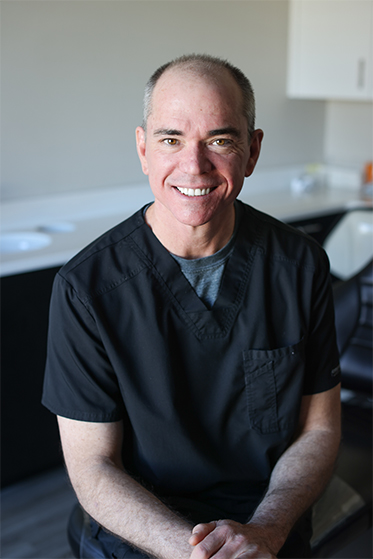
Dr. Phillips stays at the forefront of denture technology, incorporating digital scanning, 3D printing, and computer‑guided implant surgery into his practice at 29th Street Dental Care in Chickasha, Oklahoma. He believes that technology should serve the patient – not the other way around – and he carefully selects innovations that genuinely improve comfort, outcomes, and convenience for patients from Chickasha, Altus, Wichita Falls, Mustang, Norman, and across the region.
Dr. Phillips regularly attends continuing education on digital prosthodontics and implant dentistry, ensuring that his patients have access to the latest evidence‑based advancements. He is committed to explaining complex technologies in plain language, so you can make informed decisions about your care.
Sources and References
- 📄 Accuracy assessment of removable partial denture frameworks fabricated by selective laser melting – Springer, 2025. Full‑digital workflow showed superior accuracy compared to combined analog‑digital methods. View study
- 🏭 Dandy Two‑Visit Denture Solution – Inside Dental Technology, July 2025. Digital workflow reduces appointments from 5–7 to 2 visits. View article
- 🧪 Carbon FP3D Flexible Removable Partial Denture Resin – TCT Magazine, September 2025. First dental resin with dual‑cure chemistry, FDA‑cleared Class II. View article
- 🎨 VITA VIONIC Resin Validation – VITA Zahnfabrik press release, May 2025. Validation of VITA VIONIC materials for digital denture 3D printing. View release
- 🖨️ Biomimetic 3D Denture – Fraunhofer IGD – Formnext 2025 presentation. Multi‑material inkjet printing replicating natural tooth structure. View article
- 📊 Durability of 3D‑printed dental resin‑based composites – ScienceDirect umbrella review, March 2026. View review
- 🔧 SprintRay Apex Flex – Dentistry Today, April 2026. FDA‑cleared flexible partial denture resin. View article
- 💪 VITA VIONIC BASE RESIN FLEX – VITA Zahnfabrik press release, February 2026. View release
- 🦷 All‑on‑4 vs. All‑on‑X Comparison Guide – Imagine Your Smile, 2025. Comprehensive overview of full‑arch implant protocols. View guide
- 🏥 Implant‑Supported Overdentures with sCAIS – Journal of Dentistry, Volume 160, September 2025. View study
- 🔗 Zeramex Docklocs® 15‑Year Attachment Study – Zeramex, 2025. Retentive force maintained after 150,000 brushing cycles. View study
- ⏱️ Rodin Soft Reline for Immediate Dentures – Dentistry Today, September 2025. Chairside digital reline for 3D‑printed denture bases. View case study
Last reviewed: April 2026