
Losing most or all of your teeth in one arch changes how you eat, speak, and smile. Traditional solutions require months of waiting between implant placement and getting your new teeth. Teeth in a Day changes that timeline completely. This treatment protocol places dental implants and attaches a fixed, non-removable prosthesis within a single 24-hour period.
For patients in Chickasha, Altus, Wichita Falls, Mustang, Norman, and the Oklahoma City metro, understanding this option matters. Same-day full arch restoration offers predictable outcomes when performed on carefully selected candidates. This guide explains the procedure, candidacy requirements, recovery expectations, and how Teeth in a Day compares to traditional implants and dentures.
For a complete overview of comprehensive dental services at 29th Street Dental Care, see the Pillar article on one-stop family, implant, and sedation dentistry.
Table of Contents
Key Takeaways (TL;DR)
- Same-day fixed teeth: Implants placed and provisional bridge attached within 24 hours.
- 4 to 6 implants per arch: Strategic placement supports a full fixed prosthesis without grafting in many cases.
- Not for everyone: Requires adequate bone volume and no uncontrolled medical conditions.
- Soft diet during healing: Osseointegration takes 3-6 months before final prosthesis delivery.
- Higher initial cost than dentures: Lower lifetime cost than replacing each missing tooth individually.
- 90%+ patient satisfaction: Fixed implant prostheses outperform traditional dentures in function and comfort.
How Does the Teeth in a Day Procedure Work?
Teeth in a Day refers to immediate loading of dental implants with a fixed prosthesis. The concept is straightforward: place implants in strategic positions, then attach a temporary bridge on the same day. The patient leaves the appointment with non-removable teeth that function for basic eating and speaking during the healing phase.
The most common protocols are All-on-4 and All-on-6. These use four or six implants per arch. The posterior implants are angled up to 45 degrees to maximize contact with available bone, often avoiding the need for bone grafting. This angled placement also provides better support for the posterior portion of the prosthesis.
Traditional implant protocols require two separate surgeries and months of waiting. After implant placement, patients wait 3 to 6 months for osseointegration. During that time, they wear a removable temporary denture or go without teeth. Only after healing completes do they receive the final crown or bridge. Teeth in a Day collapses this timeline into one extended appointment.
Immediate loading success depends on achieving primary implant stability of at least 35 Ncm of insertion torque. Below this threshold, dentists should delay loading to prevent implant failure. The angled posterior implants in All-on-4 protocols often achieve higher torque values because they engage denser bone.
The final prosthesis, typically made from zirconia or high-grade acrylic with a titanium framework, is delivered after osseointegration is complete. This usually happens 4 to 6 months after the initial surgery. The final restoration is stronger and more durable than the provisional bridge.
Am I a Candidate for Teeth in a Day?
Not every patient qualifies for same-day full arch restoration. The ideal candidate has adequate bone volume to achieve primary implant stability of at least 35 to 40 Ncm of insertion torque. Without this minimum stability, immediate loading risks implant failure.
Candidates typically fall into these categories:
- Patients with advanced tooth decay affecting most teeth in an arch where individual restorations are not feasible.
- Those with severe periodontal disease causing advanced bone loss and tooth mobility.
- Existing denture wearers who want to convert to a fixed, non-removable solution.
- Patients already missing most or all teeth in an arch.
- Individuals with failing bridges or crowns that cannot be repaired cost-effectively.
Bone volume is the most common limitation. A CBCT scan performed during the consultation measures bone height, width, and density. Patients with significant bone loss may require grafting procedures. When grafting is needed, same-day loading is usually not possible because grafted bone cannot support immediate implant loading. The grafting procedure requires 4 to 9 months of healing before implant placement.
Medical contraindications include uncontrolled diabetes, active cancer treatment with bisphosphonate medications, severe immunosuppression, and uncontrolled bleeding disorders. Smoking significantly increases implant failure rates with immediate loading protocols. Heavy smokers are often advised to quit or choose a delayed loading approach.
What Happens During a Teeth in a Day Appointment?
The Teeth in a Day procedure follows a structured sequence. The entire process typically takes 3 to 6 hours per arch, depending on complexity and whether extractions are needed.
- Pre-surgical planning: CBCT scan creates a 3D model. A surgical guide is 3D printed for precision.
- Extractions (if needed): Non-restorable teeth are removed atraumatically to preserve bone.
- Implant placement: 4 to 6 implants per arch placed using the surgical guide. Angled posterior implants for All-on-4 cases.
- Multi-unit abutment attachment: Abutments screwed into each implant to create a standardized connection.
- Impression or digital scan: Captures exact position, angle, and height of each abutment.
- Provisional bridge fabrication and attachment: CAD/CAM milled bridge attached same day.
The patient leaves the same day with a fixed, non-removable provisional bridge. This bridge is designed for aesthetics and basic function during the 4 to 6 month osseointegration period. The final, stronger prosthesis (zirconia or high-grade acrylic with titanium framework) is delivered after healing completes.
What Can I Eat After Teeth in a Day Surgery?
The provisional bridge serves an important purpose during healing, but it is not designed for normal chewing forces. Patients must follow a strict soft diet during osseointegration to prevent implant failure or prosthesis fracture.
- Chew on both sides at the same time. This stabilizes the provisional bridge. Chewing only on one side can loosen the screws.
- Take very small bites. Cut food into pieces the size of a pea.
- Place food equally on both sides of your mouth. Use your tongue to distribute it.
- Chew slowly and deliberately. Do not rush. Allow healing implants to integrate without excessive force.
- Do not bite with your front teeth. Use your side teeth for chewing. Biting into whole apples or corn on the cob can fracture the provisional bridge.
Clinical studies show that implant survival rates with immediate loading range from 90 to 98 percent when patient selection and surgical protocols are appropriate. The primary cause of early failure is excessive chewing force during osseointegration. Following dietary restrictions directly affects treatment success.
How Do Teeth in a Day, Traditional Implants, and Dentures Compare?
Patient satisfaction studies consistently show higher satisfaction with fixed implant-supported prostheses compared to traditional dentures. Research published in the Journal of Prosthetic Dentistry reports satisfaction rates above 90 percent for patients who converted from conventional dentures to implant-supported fixed prostheses. Patients report improvements in chewing ability, speech confidence, and overall quality of life.
How Much Does Teeth in a Day Cost?
The cost of Teeth in a Day full arch restoration ranges from $15,000 to $30,000 per arch in the United States. Several factors influence the final price:
- Number of implants (4 vs 6 vs 8)
- Implant brand and surface technology
- Need for bone grafting
- Complexity of extractions
- Provisional bridge material
- Final prosthesis material (acrylic vs zirconia)
- Laboratory fees (digital vs conventional)
- Number of teeth replaced
- Geographic location and cost of living
- Provider experience and credentials
- Sedation or anesthesia fees
- Follow-up care and adjustments
For comparison, conventional full dentures cost $1,500 to $5,000 per arch. Traditional individual implant restorations for a full arch (replacing each missing tooth with its own implant and crown) would cost $40,000 to $80,000 or more. Teeth in a Day occupies a middle ground: higher upfront cost than dentures but significantly lower than replacing every tooth individually, with better function and patient satisfaction than dentures.
Many dental insurance plans provide partial coverage for implant-related procedures, typically covering the extraction, diagnostic imaging, and sometimes a portion of the prosthesis. Medical insurance may cover implant treatment when tooth loss results from trauma or congenital conditions. Third-party financing options are also available through companies like CareCredit.
Frequently Asked Questions
People Also Ask
- Can I get Teeth in a Day if I have bone loss? Yes, but with limitations. The All-on-4 design specifically addresses mild to moderate bone loss by angling the posterior implants. Patients with severe bone loss may still need grafting, which delays same-day loading.
- How many implants are needed for a full arch? Minimum of four implants per arch (All-on-4). Six implants per arch (All-on-6) provides more even force distribution. The specific number is determined during CBCT treatment planning.
- Do Teeth in a Day look natural? Yes. The provisional and final prostheses are custom-shaded and designed to mimic natural enamel translucency. Gum-colored acrylic or ceramic replaces missing soft tissue.
- What is the failure rate for same-day implants? Systematic reviews report implant survival rates of 90 to 98 percent for immediate loading protocols when strict patient selection criteria are followed. Smoking and uncontrolled diabetes increase failure risk.
- Can I get Teeth in a Day with dental insurance? Many dental insurance plans provide partial coverage for extractions, CBCT imaging, and sometimes a portion of the prosthesis. Coverage varies widely by plan and carrier.
About the Author / Meet the Dentist
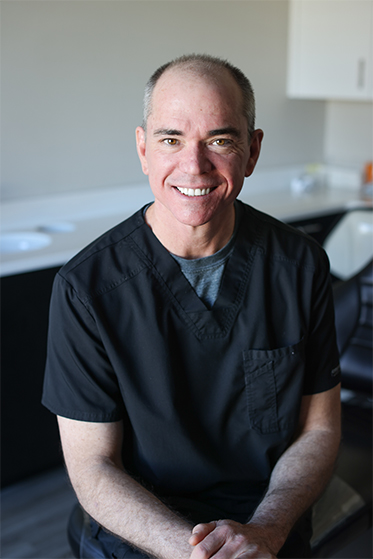
Dr. John Phillips III, DDS
Dr. Phillips is the lead implant surgeon at 29th Street Dental Care in Chickasha, Oklahoma. He has extensive experience in full arch immediate load protocols including All-on-4 and All-on-6 treatment. Dr. Phillips performs the surgical and prosthetic phases of Teeth in a Day, ensuring continuity of care from consultation through final prosthesis delivery.
Dr. Phillips serves patients from Chickasha, Altus, Wichita Falls, Mustang, Norman, and the Oklahoma City metro. He believes that fixed implant prostheses offer the best quality of life for eligible patients who are missing most or all of their teeth. His approach combines advanced surgical planning using CBCT technology with same-day provisionalization to minimize treatment time without compromising outcomes. Dr. Phillips offers complimentary implant consultations to evaluate candidacy and discuss all treatment options including traditional implants, dentures, and Teeth in a Day.
Conclusion
Teeth in a Day represents a significant advancement in full arch tooth replacement. For carefully selected candidates, the protocol offers fixed, non-removable teeth within 24 hours of implant placement. This eliminates the months of waiting required by traditional implant approaches and the functional limitations of conventional dentures.
Success depends on proper patient selection, precise surgical planning, and strict adherence to post-operative dietary guidelines. Patients who follow the soft diet during osseointegration and maintain excellent oral hygiene achieve implant survival rates comparable to delayed loading protocols.
For patients in Chickasha, Altus, Wichita Falls, Mustang, Norman, Oklahoma City, and surrounding communities, 29th Street Dental Care offers comprehensive implant services including same-day full arch restoration. A consultation with Dr. Phillips includes a CBCT scan, candidacy assessment, and discussion of all treatment options. To learn more about comprehensive dental care in the region, read the Pillar article on one-stop family, implant, and sedation dentistry.
Last reviewed: May 2026